

19 February 2026
Are you insured to drive in red weather warnings? Your 2026 guide
8 minutes
-
Your car insurance remains valid during a red weather warning, but you must drive responsibly and follow safety advice if travel is unavoidable.
-
Red warnings signal rare and extremely dangerous weather, and authorities strongly advise avoiding all travel unless absolutely essential.
-
Insurers may challenge claims if you’re found to have driven recklessly or ignored official warnings, including road closures or unsafe flood conditions.
-
Comprehensive cover normally includes storm‑related damage, while Third Party Only and Third Party, Fire and Theft policies usually exclude it.
-
If you must travel during a red weather alert, check your route for closures, leave plenty of time and drive extra carefully.
Extreme weather can cause confusion about driving and insurance, especially during a red weather warning. In this guide, we'll separate the facts from the fiction, explaining what these warnings mean, how they affect your cover and the practical steps to protect yourself and your vehicle in 2026.
What’s covered
- Are you insured to drive in a red weather warning?
- What does a red weather warning mean?
- Does my insurance cover storm damage?
- How to prepare your vehicle for a red weather warning
- 8 tips for driving during a red weather warning
- How to prepare your vehicle after a red weather warning
- How to claim for storm damage
- FAQs
Get in touch with us! A member of the Howden team would love to help you find a policy that's right for you!
Are you insured to drive in a red weather warning?
While we strongly recommend that you don’t drive, car insurance generally remains valid while a red weather warning is in place. This means you remain insured to drive, so long as you drive responsibly and take all the necessary precautions.
Exceptional circumstances and contributory negligence
While your cover will remain active during a status red warning, there are exceptional circumstances where an insurer may challenge a claim or refuse cover if they can provide evidence of reckless or negligent driving. This is known as contributory negligence. Common examples include:
- Ignoring road closure signs
- Driving through deep floodwater
- Failing to reduce speed to match severe weather conditions
While there’s no legal restriction on driving during a red weather warning, authorities and safety bodies strongly advise against it and recommend avoiding unnecessary travel. Red warnings signify rare and extremely dangerous weather conditions, posing severe risks to people, vehicles and property.
You should always check the Road Safety Authority (RSA) website to see if it's safe to drive during severe weather warnings.
What does a red weather warning mean?
When severe weather is expected in Ireland, Met Éireann issues an official weather warning to alert the public. A red weather warning is the most severe warning that Met Éireann can issue.
Weather warnings fall into one of three colour categories, ranging from least to most severe. The table below outlines each status level according to Citizens Information*:
*Source: Citizens Information - Severe weather
These warnings are usually issued within 2.5 days ahead of the expected weather. For more information, Met Éireann provides a downloadable severe‑weather chart that explains each status level in more detail.
Does my insurance cover storm damage?
While you're insured to drive in a red weather warning, whether or not your car insurance covers you for storm damage depends on your level of cover.
If you have fully comprehensive car insurance, you are generally covered for storm damage. Insurance Ireland, the main representative body for the Irish insurance sector, confirms that "Damage to cars [caused by a storm] is covered by comprehensive motor insurance policies."
Commonly covered incidents include:
- Fallen trees & flying debris: High winds causing branches, trees or debris to fall on your car.
- Hail damage: Dents and broken windows from hailstones.
- Flooding: Water damage to interiors and electrical systems (excluding damage caused from driving through avoidable flooded roads).
- Lightning: Damage or fire caused by lightning strikes.
However, third party fire and theft policies (TPFT) and third party only policies (TPO) do not cover storm damage to your own vehicle, although they still cover damage to other cars.
*Excluding damage caused due to negligence
How to prepare your vehicle for a red weather warning in Ireland
- Park your car in a garage whenever possible to shield it from high winds and debris.
- If a garage isn’t available, choose a parking spot well away from trees, branches and overhead power lines.
- Secure any loose items around your home (such as bins or garden furniture) to stop them being blown into your vehicle.
- EV owners should fully charge their car before the red warning begins to avoid charging during dangerous conditions.
- Carry out basic maintenance checks before the red warning begins, including tyre pressure, oil levels, fuel or battery range, and washer fluid, so your vehicle is safe and ready if you do need to travel.
8 tips for driving during a red weather warning
If a red weather alert is issued, first ask yourself if your journey is really necessary. The best advice is to simply not drive. However, if you absolutely have to, here are our top tips:
1. Plan ahead and check your route before you leave
If there are any road closures or diversions, make sure you have an alternate route in mind. Failing to obey diversions put in place by local authorities can put you in danger and count as contributory negligence.
2. Pack an emergency kit
Keep things like a shovel, scraper, torch, spare de-icer and screen wash, a warning triangle and a portable phone charger, as these can make a difference if you break down or become stranded.
3. Tell someone where you're going and when you expect to arrive
Whether it's a friend, colleague or family member, always let someone know where you’re going just in case.
4. Allow plenty of time for your journey
Giving yourself extra time reduces the pressure to rush and helps you stay in full control when conditions are hazardous.
5. Slow right down and leave extra space
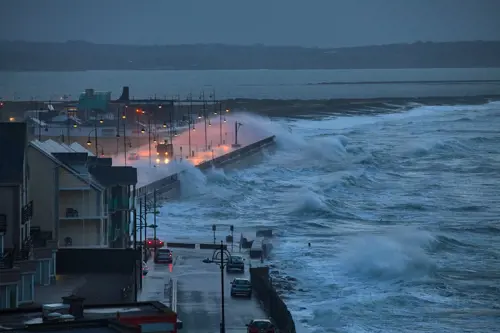
You'll have a much greater braking distance and less control in conditions like heavy rain, ice or snow. Drive slowly, double your distance between other cars, and watch for vehicles veering from strong crosswinds.
6. Use dipped headlights and maximise visibility
Heavy rain and spray hide hazards and make you harder to see. Use dipped headlights even during the day to help other road users see you.
7. Never drive through floodwater
Surface water on flooded roads is often deeper than it looks, risking engine damage, electrical faults or loss of control.
8. Be ready to stop and wait
If strong winds or visibility become extreme, pull in somewhere safe and wait for conditions to improve rather than pushing on.
How to prepare your vehicle after a red weather warning
Once the worst of the weather has passed, here's how you can make sure your car is road-ready before you resume normal driving:
-
Remove debris from the windscreen and wipers, check under the bonnet area for leaves or branches, and look for visible damage.
-
Check all your exterior lights, your brakes are responsive and tyre pressures.
-
Check the interior of the car for any rain or flood damage. If the car has been through deep standing water, do not start it until assessed by a professional.
-
Watch for ongoing road hazards. Expect fallen trees, power lines, flood water and road blockages even after the warning lifts, and adjust your route and speed accordingly.
How to claim for storm damage in 6 steps
If your car has been damaged by extreme weather, here's how to make a claim step-by-step:
-
Safety first: avoid driving through flooded areas and park your vehicle well clear of hazards like falling trees.
-
Document the damage: take clear photos and videos of the damage and the surrounding environment before moving the vehicle.
-
Notify your insurance company as soon as possible to report the damage and start the claim process.
-
Check your cover: review your policy to confirm it covers storm damage, and check your excess and NCD status.
-
Don't start repairs or discard any damaged parts until your insurer approves it.
-
Keep records: including any correspondence, emails and letters between you and your provider.
Sources:
This is a marketing article from Howden Insurance. The information in this guide is accurate at time of publication. This content is provided for general information only and does not constitute financial or insurance advice.
Are you insured to drive in red weather warnings: FAQs
Do you have to go to work in a red weather warning in Ireland?
There’s no law forcing you to go to work during a red weather warning. Employers are not legally required to pay you if you can’t attend due to severe weather, but they are encouraged to prioritise staff safety and offer flexible options like remote work or leave.
Can you drive in an orange weather warning?
Yes, you can drive in an orange warning, but conditions may be dangerous. The RSA advises checking local conditions, slowing down, allowing extra braking distance and avoiding flooded or closed routes due to risks like poor visibility, strong winds and wet weather conditions.
Can I still drive with a yellow warning?
Yes, travel is generally permitted under a yellow warning, but drivers should still take care in bad weather and follow official advice.