

10 February 2026
Is electric car insurance cheaper in Ireland? Your questions answered
7 minutes
-
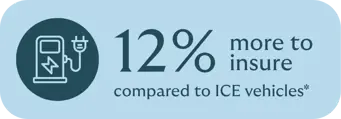
Electric car insurance in Ireland is typically more expensive than petrol or diesel models, costing around 12% more on average.
-
Higher vehicle value, expensive batteries, repair costs and availability of parts all contribute to higher premiums for electric vehicles (EVs).
-
The gap is closing: As EV adoption grows and insurers gain confidence, competition is increasing and insurance costs are likely to lower.
-
EVs deliver long-term savings: Lower running costs, reduced maintenance, and government incentives can make electric cars more cost-effective over time.
-
There are still ways to save: EV-specific policy discounts, paying annually, increasing your voluntary excess and parking off-road can help lower premiums.
Thinking about going electric? You’re not alone. More and more Irish drivers are making the switch to electric cars, drawn to their benefits of eco-friendly driving, generous grant schemes and low running costs.
Despite this growth, there's still a lot of misconceptions about the actual cost of buying and running an EV, particularly around insurance. If you're wondering whether electric car insurance is cheaper than for petrol or diesel cars, the answer is no - at least not for now. Here’s a clear look at the facts: what drives EV insurance costs, reasons to make the switch, and smart ways to help you save on your premium.
What’s covered
- Are electric cars cheaper to insure in Ireland?
- 4 key reasons why electric car insurance is more expensive
- What else influences electric car insurance costs?
- 5 key benefits of electric cars
- Are electric cars becoming cheaper to insure?
- 5 ways to save on your EV car insurance
- FAQs
Get in touch with us! A member of the Howden team would love to help you find a policy that's right for you!
Are electric cars cheaper to insure in Ireland?
The short answer is no. Electric car insurance in Ireland is not always cheaper than cover for internal combustion engine (ICE) cars. In fact, premiums for EVs are often slightly higher, costing around 12% more to insure according to leading sustainable mobility provider Ayvens*.
That being said, the gap is closing. As EV ownership grows and the market matures, competition among insurers is increasing, with some providers now offering discounts for electric cars. Beyond insurance, long term savings on things like fuel, maintenance and tax means electric cars are generally more cost-effective than ICE cars.
4 key reasons why electric car insurance is more expensive
Electric vehicles (EVs) often have higher insurance premiums compared to ICE cars for several reasons:
1. Higher upfront costs
EVs generally cost more upfront compared to ICE cars. The market value of a new car is a key factor in determining your insurance premium, so a vehicle with a higher market value usually attracts a higher premium. It will also cost more to replace an electric car in the event of theft or total loss. Even with government incentives, the initial cost of an e-car is still higher compared to ICE cars.
2. Battery costs
One of the biggest differences between electric cars and ICE cars is the battery. It is the most expensive component in an EV (often accounting for 30% to 50% of the car's total value), and insurers take this into account when calculating premiums. If a battery is damaged in an accident, replacing it can be extremely costly, which pushes insurance prices higher.
Fortunately though, full battery replacement is uncommon. Most EV batteries use modular cells, so only damaged cells are repaired or swapped, which lowers costs compared to replacing the entire unit. Nonetheless, the potential expense still influences insurance costs.
3. Repair costs and parts availability
Fixing an electric car can be more expensive than repairing a petrol or diesel model. EVs often require specialist components that are more expensive and harder to source. On top of that, repairs need skilled technicians trained in electric vehicle systems, which adds to labour costs. Insurers also factor in these potential expenses when setting premiums.
4. Performance and speed
The speed and power of a car is a key factor in determining its insurance group. Electric vehicles deliver instant torque, which means they accelerate far quicker than many ICE cars. This rapid power delivery can be seen as a higher risk by some insurers, placing certain EV models in higher insurance groups, increasing its insurance premium.
What else influences electric car insurance costs?
Your car's make and value play an important role in determining your insurance premium, but they’re only part of the picture. Other key factors influencing costs include:
-
Policy type and level of cover
-
Driver age and experience
-
Driving history
-
Your address
-
Annual mileage
-
Your occupation
-
Gross vehicle weight
-
Overnight location and storage
-
Security
5 key benefits of electric cars
1. Lower running costs
One of the biggest advantages of driving electric is the savings on everyday running costs. These include:
-
Fuel: Electric charging is much cheaper per mile than petrol or diesel, especially when done at home overnight.
-
Servicing: E-cars have fewer moving parts, meaning servicing is less frequent and cheaper overall.
-
Tax: Motor tax is based on a vehicle’s emissions, so electric cars fall into the lowest band, costing just €120 a year for a battery electric model.
Over the life of the car, these savings really add up, making EVs far more cost-effective in the long term compared to ICE cars.
2. Government grants and incentives
Drivers in Ireland can take advantage of a range of grants and tax incentives designed to make EV ownership more affordable. Some of these include:
-
SEAI Electric Vehicle grant - provides up to €3,500 towards the cost of a new Battery Electric Vehicle (BEV).
-
EV Home Charger grant - Offered by the SEAI to help with the cost of installing a home charger. You can claim up to €300 towards the purchase and installation of an EV charging unit.
-
Vehicle Registration Tax (VRT) Relief - Up to €5,000 VRT relief for electric vehicles registered before 31 December 2026
-
0% Benefit-in-Kind (BIK) - A 0% BIK rate applies to the first €35,000 of a battery electric vehicle’s value, with no mileage conditions.
Find out more information on government incentives for EVs on the SEAI website.
3. Less maintenance
Fewer moving parts means fewer components that can fail. There’s no need for oil changes, exhaust repairs, or dealing with complex engine components, plus brake wear is reduced thanks to regenerative braking systems. This means EVs have lower maintenance bills over the life of the vehicle compared to petrol or diesel cars.
4. Zero emissions
Electric cars produce zero tailpipe emissions, which means cleaner air and a smaller carbon footprint. For drivers who want to reduce their environmental impact, switching to an EV is one of the most effective steps.
5. Expanding charging infrastructure
Access to charging points is improving rapidly across Ireland. The ESB currently operates a growing network of 1,600 public charging stations across the island of Ireland*, making it easier than ever to keep your e-car topped up.
Are electric cars becoming cheaper to insure?
For now, electric car insurance premiums in Ireland are often higher than their petrol or diesel counterparts, but the gap is narrowing. Some insurers now offer discounts for electric cars, reflecting lower running costs and the growing appeal of EVs. As more EVs are registered in Ireland, more mechanics learn about EV technology and parts become easier to source, meaning insurance costs are likely come down.
The market is also maturing. Insurers are moving away from early assumptions about high accident rates and costly repairs, using real-world data to price risk more accurately. This shift, combined with increased competition, means EV insurance is gradually becoming more affordable, and drivers can expect further reductions as adoption continues to rise.
5 ways to save on your EV car insurance
While electric car insurance may be more expensive for the time being, there are still ways you can save. Here's our 5 top tips:
1. Check for EV-specific discounts
Some insurers offer special discounts for electric car owners, so make sure you shop around. These may include reduced premiums for eco-friendly vehicles, savings for home charging point installation, or lower rates for low-mileage drivers.
2. Park off-road
Where you keep your vehicle overnight directly affects your premium. A locked garage is best, but a driveway or private land is safer than leaving it on the street.
3. Pay annually
Monthly instalments often include interest, making them more expensive. Paying in full each year usually works out cheaper.
4. Increase your excess
Choosing a higher voluntary excess can lower your premium. Just make sure it’s an amount you can afford if you need to claim.
5. Speak to a broker
At Howden, we can help you explore the options available in the market and advise you on the most suitable cover based on your needs. We can guide you on what insurers require and how to secure the best value for your circumstances.
*Sources:
This is a marketing article from Howden Insurance. The information in this guide is accurate at time of publication. This content is provided for general information only and does not constitute financial or insurance advice.
FAQs about EV cars and insurance
What's the difference between a hybrid car and an electric car?
A hybrid car combines a petrol or diesel engine with an electric motor, allowing it to switch between or use both power sources. It still relies on fuel for longer journeys. An electric car, on the other hand, runs solely on battery power, with a fully electric motor that produces zero tailpipe emissions. Hybrids reduce fuel use but aren’t fully emission-free, while EVs offer cleaner driving and lower running costs.
What is the biggest disadvantage of electric cars?
The main drawback for electric cars is the higher upfront cost compared to petrol or diesel cars. Although running costs are lower, the initial purchase price can be a barrier, and internal combustion engine cars still tend to be cheaper to insure.
Limited charging stations in some areas and longer charging times compared to refuelling also pose challenges for drivers who travel long distances frequently.
Which electric car is the cheapest to insure?
Smaller, lower-value EVs with modest engine size typically attract the cheapest insurance premiums. Models like the Nissan Leaf or Renault Zoe often fall into lower insurance groups because they cost less to replace and have modest performance compared to high-end electric cars.
While your car matters, it's important to remember that your actual premium will vary depending on factors such as age, experience and level of cover.
What is the 80 20 rule for EV charging?
The 80/20 rule means charging your EV battery to around 80% rather than 100% for daily use. This helps preserve battery health and speeds up charging times, as the final 20% takes longer to fill. It’s a practical way to balance convenience and long-term battery performance.
Does insurance cover EV batteries?
Yes, most comprehensive car insurance policies cover the battery as part of the vehicle. If the battery is damaged in an accident, repairs or replacement are usually included. However, wear and tear or gradual capacity loss is not covered, so always check your insurance policy details for exclusions.